WHAT YOU NEED TO KNOW
- DPAA plans to petition for the exhumation and identification of the Korean War Unknown buried at Arlington National Cemetery.
- The agency possesses DNA samples from 94% of roughly 7,400 American service members still missing from the Korean War.
- Fewer than 50 Korean War Unknowns remain in the Honolulu cemetery, with that identification process expected to finish by the end of November.
- A previous exhumation identified the Vietnam War Unknown as Air Force Capt. Michael J. Blassie in 1998.
The Defense POW/MIA Accounting Agency is seeking to exhume and identify the remains of the Korean War service member buried as an Unknown beside the Tomb of the Unknown Soldier at Arlington National Cemetery.
The proposal reflects the agency’s assessment that the probability of identifying the service member is high.
During a Sept. 1 webinar, DPAA director Kelly McKeague told Stars and Stripes that the agency intends to petition Arlington National Cemetery.
“We will petition Arlington National Cemetery to disinter the remains at the Tomb of the Unknown simply because the probability is high that we will be able to identify that unknown,” he said.
Gold. Upgraded. Buy real gold from $1. Store it in America. Sell it with one click.
That confidence rests in part on the agency’s collection of DNA samples.
According to McKeague, DPAA now possesses samples from 94% of the roughly 7,400 American service members who remain listed as missing from the Korean War.
The agency plans to petition the Army, which oversees Arlington National Cemetery, but any potential exhumation and identification effort would wait until other work is finished.
All Korean War Unknowns currently residing in the Honolulu cemetery must first be exhumed and identified.
This Could Be the Most Important Video Gun Owners Watch All Year
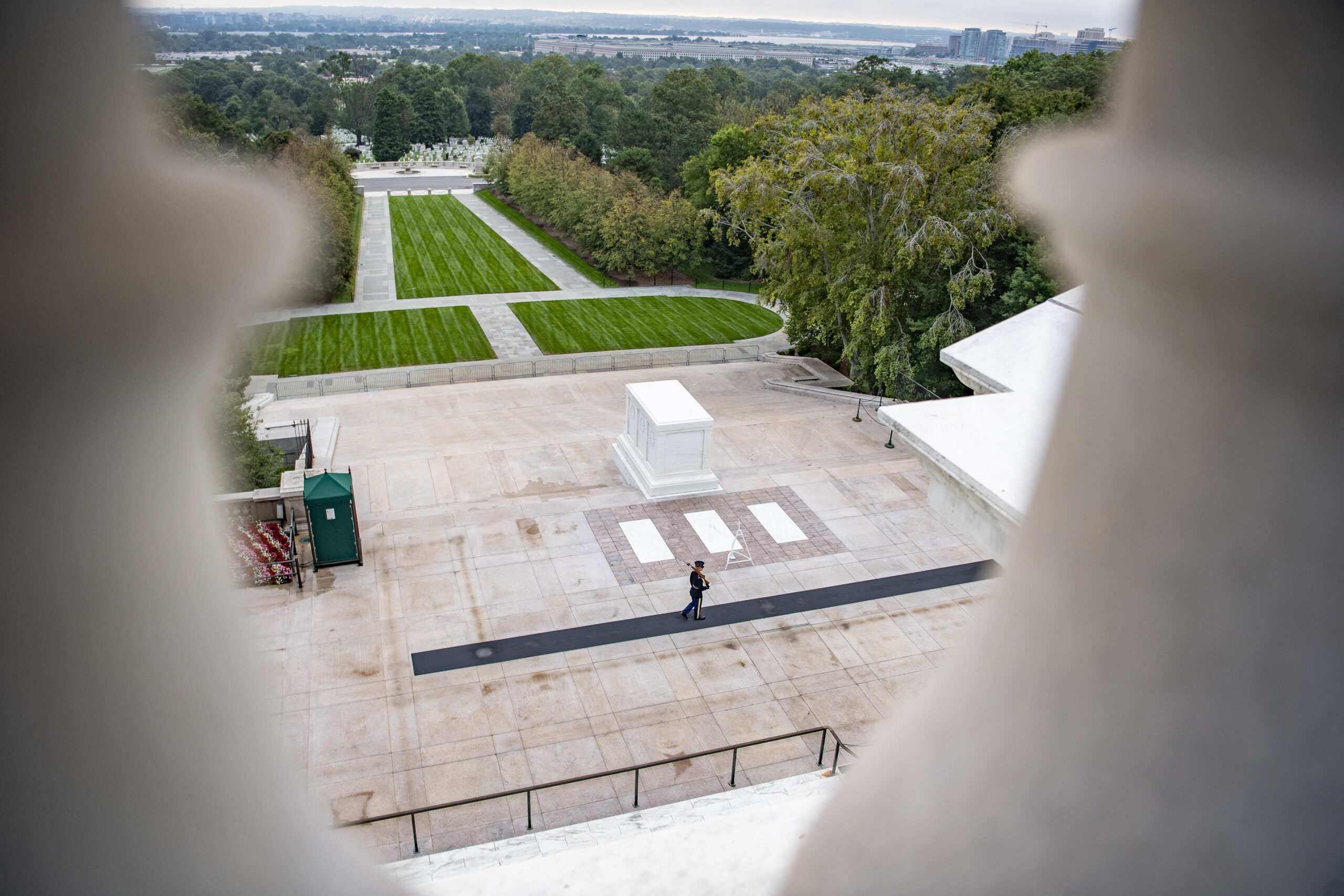
Fewer than 50 Korean War Unknowns remain there, according to Lance Pridemore, assistant director at the cemetery.
Pridemore told Stars and Stripes that the process should be completed by the end of November.
The Korean War Unknown has rested at Arlington since May 30, 1958.
On that date, the Korean War and World War II Unknowns were interred during ceremonies presided over by President Dwight D. Eisenhower, who presented the Medal of Honor to each Unknown.
Eisenhower was a former general who held five star rank and had served as commander of the Allied Expeditionary Force during World War II.
The ceremonies placed the two Unknowns among the nation’s most solemn military memorials.
In the decade following the Vietnam War, members of the American public called for another unknown service member to be designated.
The remains eventually chosen for that role were known only as X-26 and were being held at the U.S. Central Identification Laboratory in Hawaii.
Those remains had been found near a stream in An Loc in 1972. After remaining unidentified for more than a decade, X-26 was selected to represent the nation’s missing from the Vietnam War and was buried at Arlington on Memorial Day in 1984.
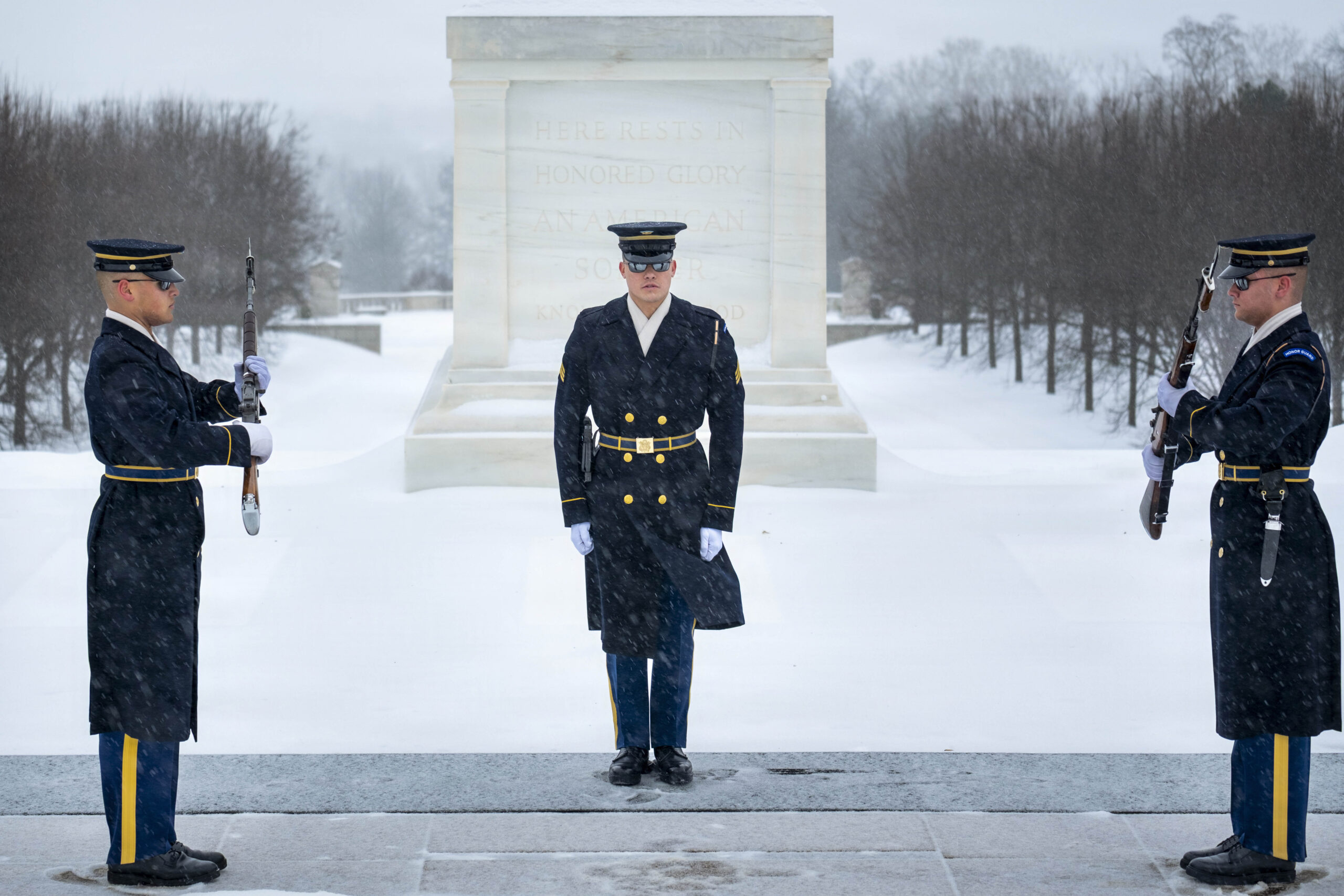
President Ronald Reagan awarded the Medal of Honor to the unknown service member during the ceremony.
MORE NEWS: Country With Policies the Democrat Socialists Want to Implement Just Plunged Into Darkness
The identity represented by that burial, however, would later face scrutiny as evidence mounted around one missing Air Force pilot.
In 1994, the family of Capt. Michael J. Blassie submitted a formal request to the DoW to exhume X-26 and conduct DNA testing.
The request came amid mounting evidence that their son was the service member buried as the Vietnam War Unknown.
Then Secretary of War William Cohen described the gravity of the decision. “We disturb this hallowed ground with profound reluctance.
And we take this step only because of our abiding commitment to account for every warrior who fought and died to preserve the freedoms that we cherish.”
The remains were taken to the Armed Forces Institute of Pathology at Walter Reed Army Medical Center for testing.
Results confirmed on June 28, 1998, that the Unknown Soldier was Blassie.
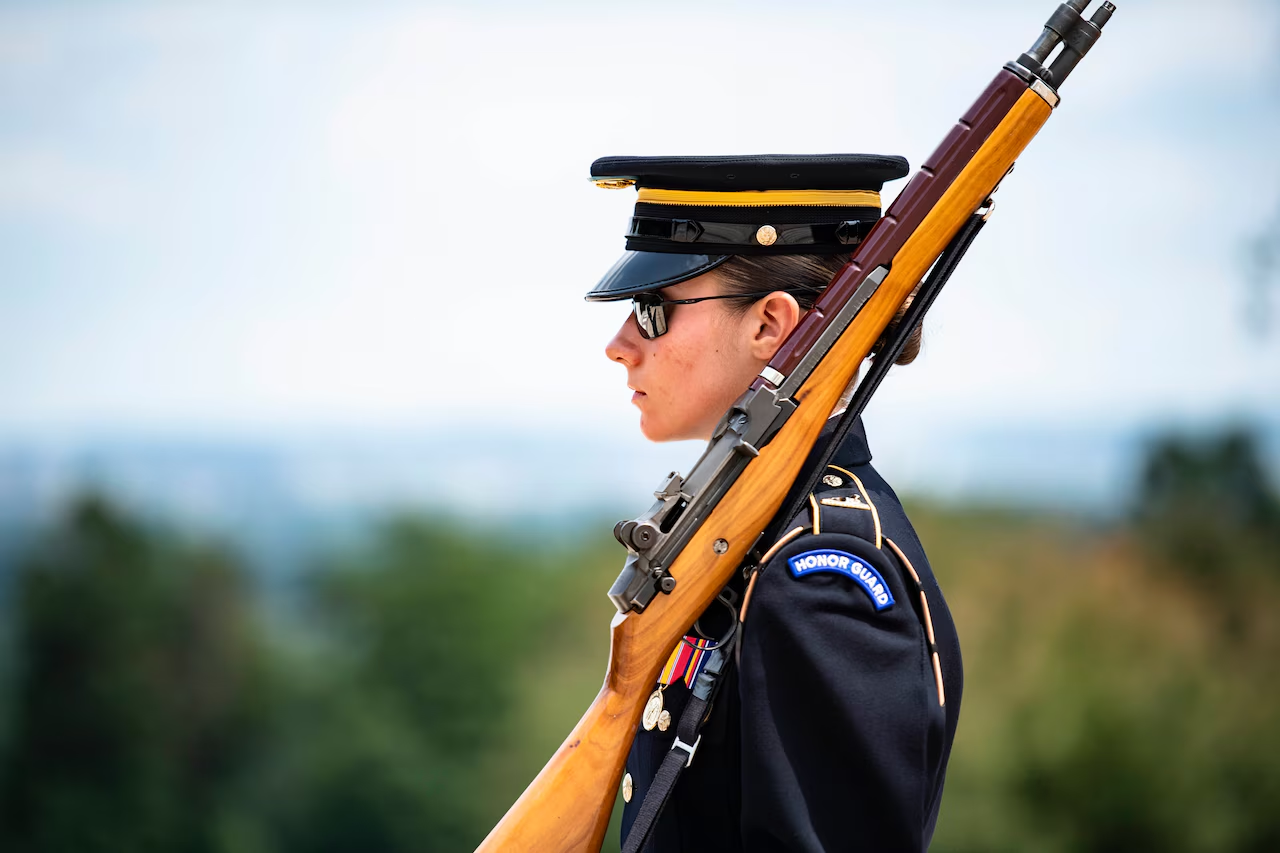
Several weeks later, an MC-130E aircraft from Blassie’s former unit, the 8th Special Operations Squadron, carried his remains to his home state of Missouri.
He was then interred again at Jefferson Barracks National Cemetery in Saint Louis County, Missouri, according to the Society of the Honor Guard.
The marble crypt that had honored Blassie was ultimately changed to carry a broader inscription.
It now reads: “Honoring and Keeping Faith with America’s Missing Servicemen, 1958–1975.”
Gold is the oldest answer. SoundMoney makes owning it as easy as the apps you already use.
The opinions expressed by contributors and/or content partners are their own and do not necessarily reflect the views of LifeZette. Contact us for guidelines on submitting your own commentary.
Join the Discussion
COMMENTS POLICY: We have no tolerance for messages of violence, racism, vulgarity, obscenity or other such discourteous behavior. Thank you for contributing to a respectful and useful online dialogue.