WHAT YOU NEED TO KNOW
- Hegseth’s Nov. 2 memo would rename the special operations oversight office after the historic Office of Strategic Services.
- The proposal would elevate the office to Code 2 status, placing civilian special operations oversight alongside the service secretaries.
- The memo seeks $45 million in additional funding and 100 more personnel, including 75 civilians and 25 service members.
- The original OSS reached roughly 13,000 personnel during World War II, with women comprising 35% of its ranks.
War Secretary Pete Hegseth has brought the Office of Strategic Services back into the federal vocabulary, though not as a rebuilt World War II spy and commando organization. For now, the OSS revival begins with a proposed title and a larger bureaucratic perch.
On Nov. 2, Hegseth issued a memo directing that the assistant secretary of war for special operations and low-intensity conflict be renamed the assistant secretary of war for the Office of Strategic Services. The move borrows one of American military history’s most famous intelligence names for modern special operations oversight.
The memo also seeks to elevate the position to “Code 2,” a designation reserved for the most senior civilian and military leadership positions, according to the War Department. If Congress approves the change, civilian oversight of special operations forces would stand on par with the service secretaries.
The directive calls for additional personnel and funding as the Pentagon makes increasing use of special operations forces. The January raid to capture Venezuelan President Nicolas Maduro was cited as one example, while lawmakers and personnel within the special operations community are pressing Congress for a larger portion of the defense budget.
MORE NEWS: Who Do You Hope to Become?
The Pentagon is considering a 44% overall budget increase to $1.5 trillion in fiscal year 2027, according to a Washington Times article. However, U.S. Special Operations Command operations and maintenance funding would rise more modestly, from $9.7 billion in discretionary spending this fiscal year to $10.9 billion in 2027.
“Special operations forces conduct direct action against high-value targets. … They train and advise partner forces, building capacity and strengthening alliances across Latin America, Europe and the First Island Chain,” Sen. Roger F. Wicker, Mississippi Republican and chairman of the Senate Armed Services Committee, said at an April hearing.
Wicker also described the intelligence, crisis response and strategic competition missions handled by those forces. He argued that funding has failed to match the demand placed upon Special Operations Command.
“However, the funding provided to Special Operations Command has not kept pace with the seemingly insatiable demand for its capabilities. The command faces a troubling gap between its mission requirements and available resources,” Wicker concluded.
Hegseth’s memo aims to narrow that gap by increasing funding by $45 million. It would also expand the assistant secretary’s staff with 75 civilians and 25 service members, giving the office 100 additional personnel.
“Special operations forces (SOF) remain the Joint Force’s pathfinder and our Nation’s vanguard in an era of global uncertainty and strategic competition,” the memo reads. “Despite this contribution to the Joint Force and our Nation, resourcing for SOF remains behind current operational and force posture. It is time for a bold, foundational change.”
The original OSS emerged from President Franklin D. Roosevelt’s effort to unify intelligence gathering during World War II. Roosevelt asked Gen. William “Wild Bill” Donovan, a trusted adviser and First World War veteran, to develop a framework for a centralized intelligence organization.
MORE NEWS: Ariana Grande to Lay Bare Her Private World in Deeply Intimate Project After Extended Hiatus
That work produced the Coordinator of Information on July 11, 1941. Less than a year later, Donovan presented Roosevelt with a broader vision inspired by the British Special Operations Executive and built around sabotage, espionage, guerrilla warfare and psychological operations.
The resulting OSS operated under the Joint Chiefs of Staff with Donovan at the helm. It recruited intelligence analysts, linguists, field operatives and specialists in areas including technology, economics, psychology and finance to support military operations.
OSS personnel underwent demanding training to assist guerrilla and partisan forces, particularly in the Western Theater. Its reach was not unlimited, as Gen. Douglas MacArthur barred the organization from areas under his Pacific command, while the Army’s G-2 and the Navy’s Office of Naval Intelligence opposed some OSS operations.
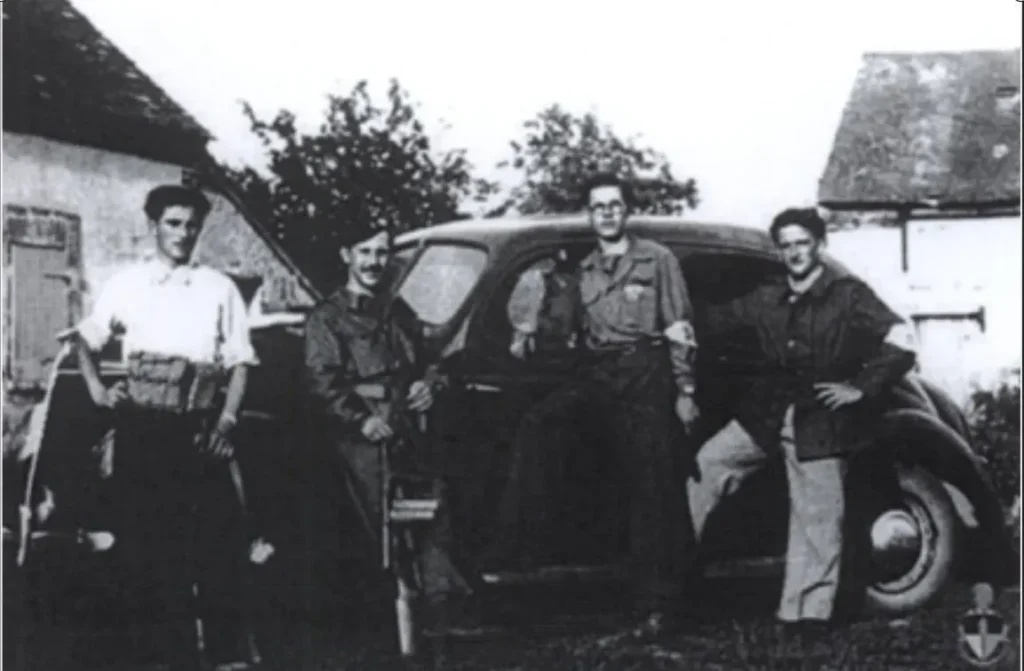
At its peak, the OSS had roughly 13,000 people, according to the National WWII Museum, and 35% were women. About 7,500 men and women served overseas, while OSS officers received military status and rank.
The OSS disbanded after the war amid internal and external rivalries, including conflict with J. Edgar Hoover’s FBI. Its ranks had included film director John Ford, Julia Child, actor Sterling Hayden, baseball player Moe Berg, historian Arthur Schlesinger, Jr. and four future CIA directors.
Parts of the OSS legacy were streamlined in 1947 into the Central Intelligence Agency and the Department of State’s Bureau of Intelligence and Research. Congress later established U.S. Special Operations Command and the office overseeing special operations and low-intensity conflict in 1987, setting the stage for Hegseth’s modern OSS revival, at least in name.
Gold is the oldest answer. SoundMoney makes owning it as easy as the apps you already use.
The opinions expressed by contributors and/or content partners are their own and do not necessarily reflect the views of LifeZette. Contact us for guidelines on submitting your own commentary.
Join the Discussion
COMMENTS POLICY: We have no tolerance for messages of violence, racism, vulgarity, obscenity or other such discourteous behavior. Thank you for contributing to a respectful and useful online dialogue.