WHAT YOU NEED TO KNOW
- The Pentagon reports 19 service member deaths and just over 830 wounded troops since the Iran war began Feb. 28.
- The Washington Post reported four additional Middle East deaths beyond those listed in the Pentagon’s casualty database.
- Secretary of War Pete Hegseth rejected any suggestion that the military could conceal a combat death.
- Lawmakers are backing legislation intended to protect casualty reporting and troops’ access to awards, pay, and deployment entitlements.
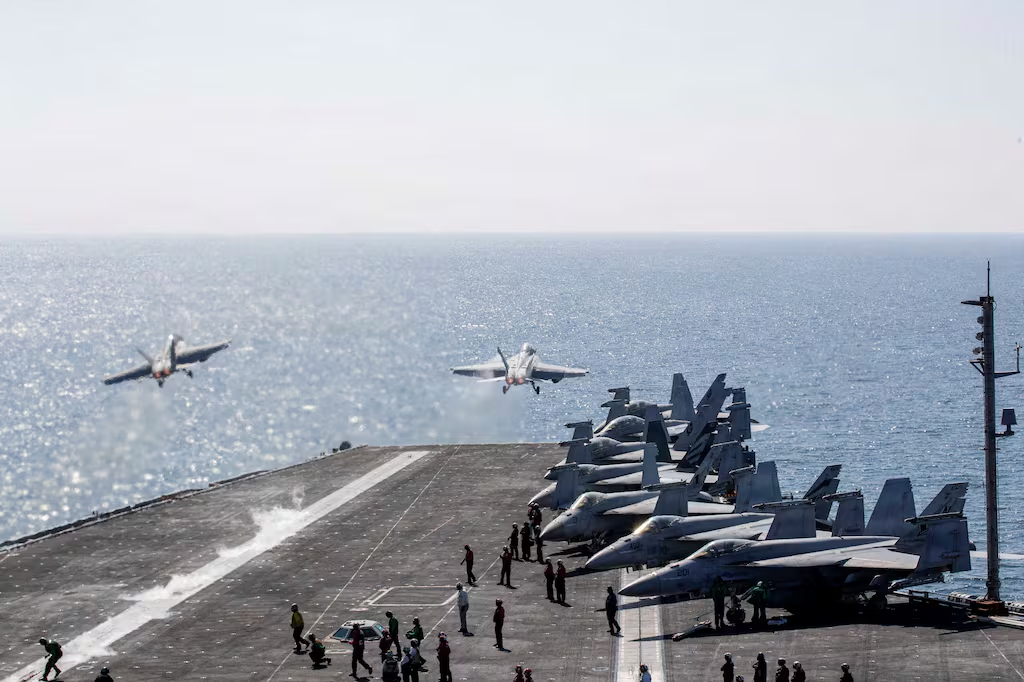
The U.S. military’s casualty reporting during the Iran war has drawn months of criticism as the Pentagon has offered little explanation for delayed reports of wounded troops and shifting totals.
Even the number of service members who died while deployed to the region has faced questions.
Since the war began Feb. 28, just over 830 service members have been wounded, according to the Pentagon’s public database.
At times, hundreds of injuries have appeared in that database overnight, adding to demands for a clearer accounting process.
Gold. Upgraded. Buy real gold from $1. Store it in America. Sell it with one click.
MORE NEWS: Trump Revives Supreme Court Immigration Battle After Hochul Pardon Sank First Case [WATCH]
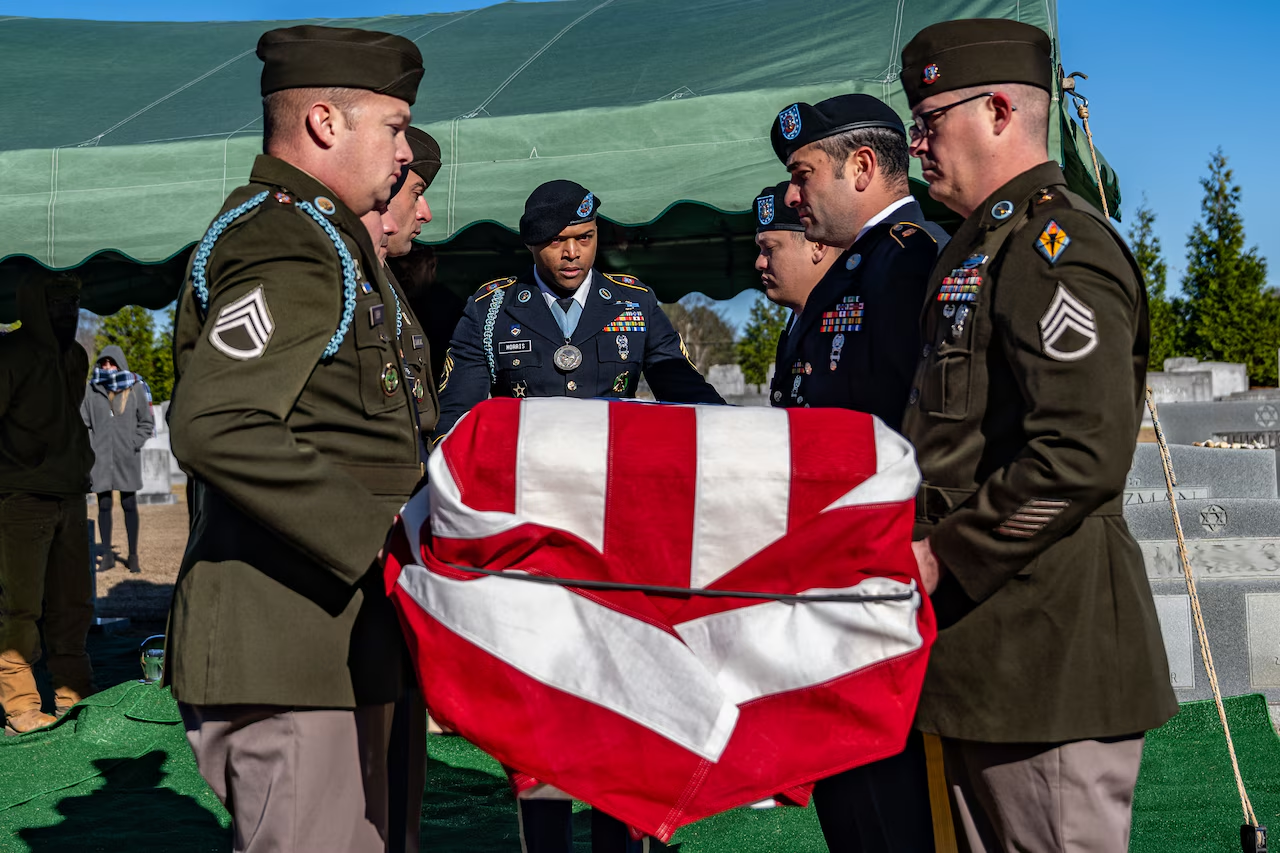
As of Monday, the Pentagon reported its 19th service member death tied to operations in the Middle East.
The Washington Post reported last week that four additional troops had died in the region since the war began, beyond those listed on the War Casualty Accounting System website.
Joe Plenzler, a retired Marine Corps spokesperson for Gen. James Mattis during the early years of the Iraq War, said the Pentagon faces a basic transparency problem.
This Could Be the Most Important Video Gun Owners Watch All Year
“All anyone’s asking for is just be transparent with the process,” Plenzler said.
He argued that dividing Iran related casualties among different categories and timeframes without providing context creates confusion for the public.
Americans want straightforward answers about how many troops have died or been wounded since the war began, he said.
A defense official said that “the deaths reported by the Washington Post were not directly related to the war with Iran.”
Requests for more context went to the Army, Air Force, Navy, and U.S. Central Command, which referred questions to the Department of War.
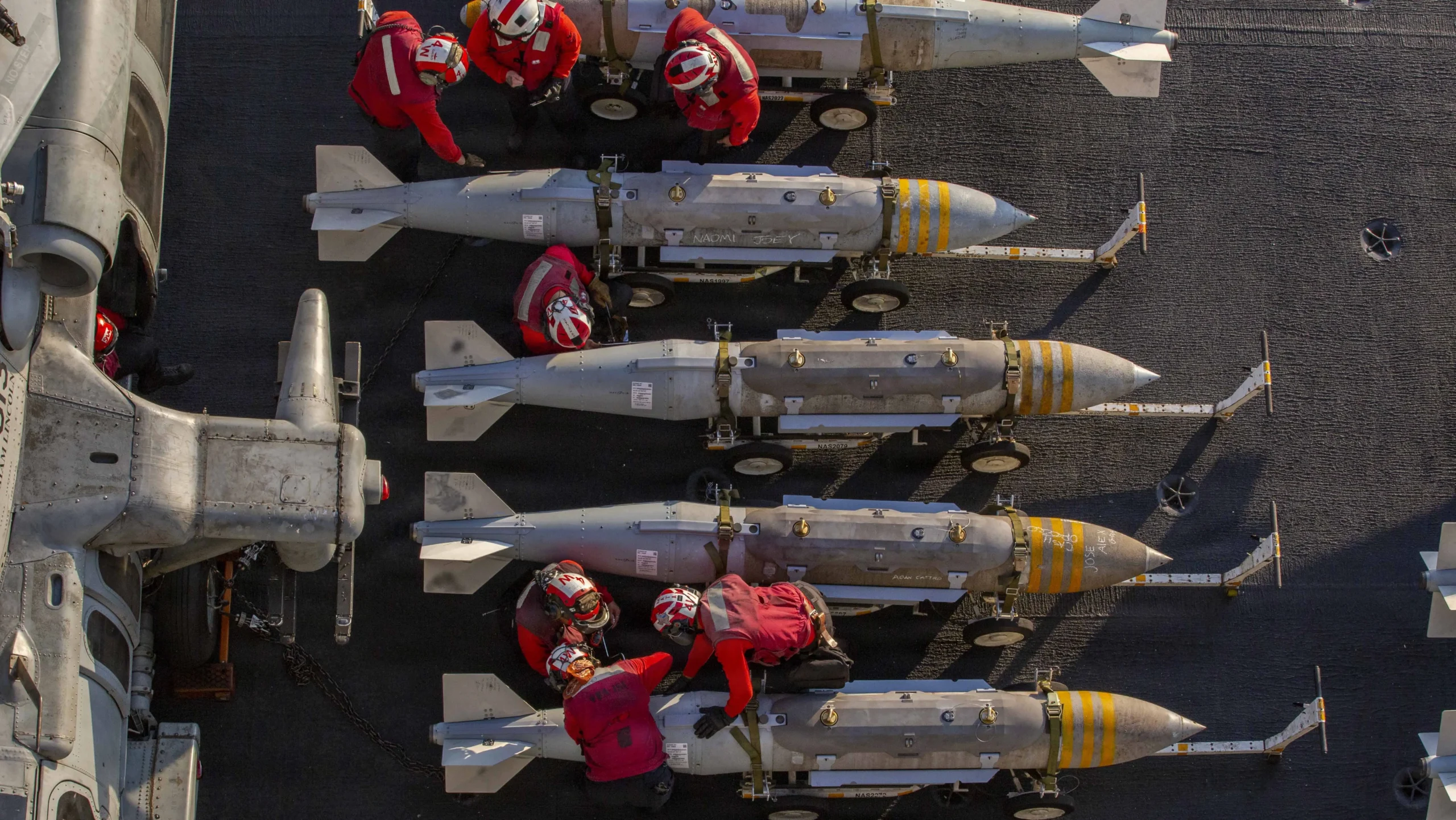
The Department of War did not respond, while the Marine Corps said no Marines have died in the Middle East since Feb. 28. Secretary of War Pete Hegseth firmly rejected any suggestion that a combat death could be concealed.
“Even if we wanted to attempt to hide a combat death, we never would and we never could,” Hegseth said in response to the report. His statement directly confronted the allegation at the center of the growing dispute.
Kori Schake, head of defense policy studies at the American Enterprise Institute, said the Pentagon’s broader lack of transparency surrounding the war has fueled distrust.
“The leadership of the War Department has squandered the public trust in their behavior, and now they are paying the price for it.”

Cliff Gilmore, a retired Marine Corps spokesperson and former casualty assistance calls officer, said a gray zone is emerging as troops suffer casualties in countries once considered safe.
He cited Kuwait and Saudi Arabia as examples of that changing landscape.
“We have non-combat zone designated places getting hit now, and it’s a gap in policy,” Gilmore said.
He recalled previously traveling through Kuwait while moving to and from Afghanistan and Iraq, when reaching Kuwait meant troops were safe.
Another source of controversy is the Pentagon’s decision to classify Middle East deaths and injuries since July under “overseas operations.”
A defense official said that classification has been used “since Operation Epic Fury has concluded.”
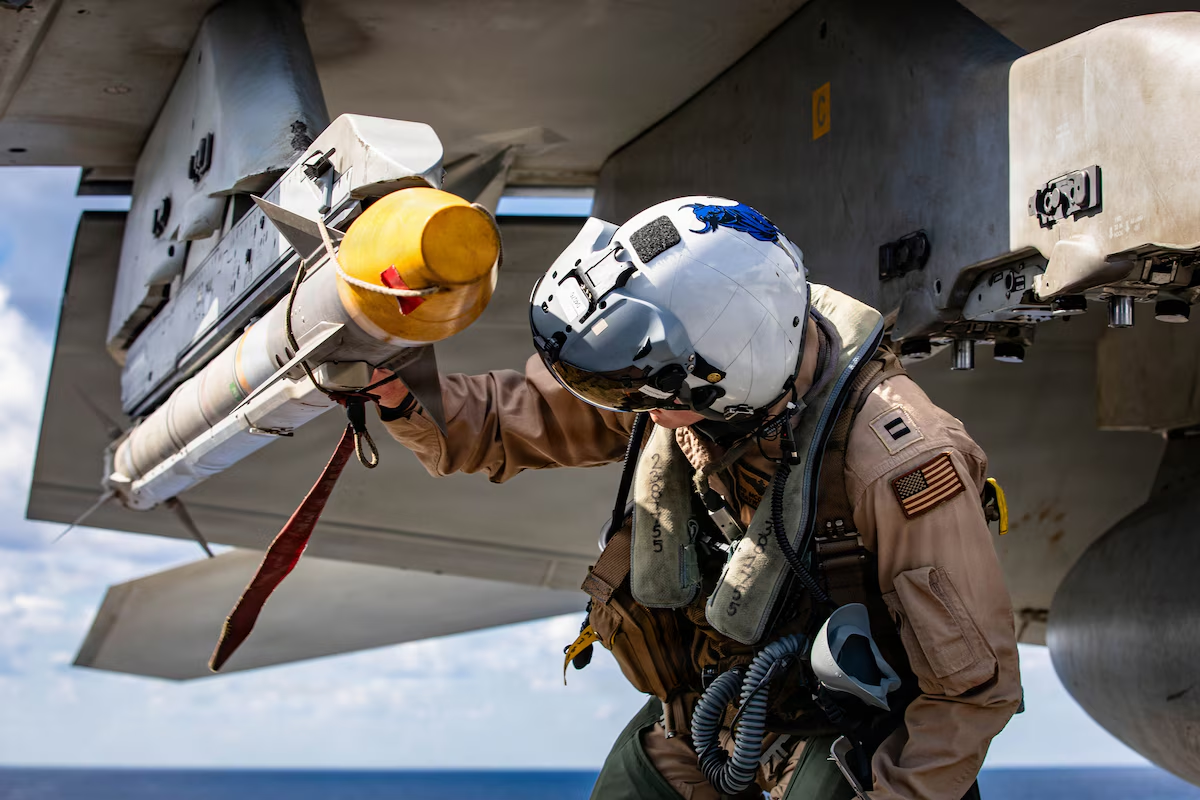
That category includes three soldiers who died in Jordan, one who died in Iraq, and an Army officer who died this month following a medical incident.
Democratic lawmakers are supporting legislation intended to prevent manipulation of casualty data and protect troops’ access to awards, pay, and other deployment entitlements.
The bill would establish terms including “covered casualty,” encompassing troops killed or injured while supporting a “designated military operation” or serving in the region.
The definition would cover military actions since Operation Epic Fury reportedly ended.
Dave Lapan, a former Pentagon spokesperson who served on missions in Afghanistan and Haiti, said accurate reporting carries serious consequences.
“Any perception that the department is playing fast and loose with casualty reporting is very damaging.”
Lapan pointed to a 2005 incident involving sailors aboard the USS Ashland and USS Kearsarge, who received combat action ribbons after missiles attacked their ships in Jordan.
Questions arose over whether the crews had been placed in danger and whether the incident qualified as hostile fire.
Past conflicts also produced casualties that resisted simple classification.
Army Maj. Marie Rossi-Cayton died in 1991 while returning from a Desert Storm mission, one day after hostilities officially ended, and her husband spent three decades seeking a posthumous Purple Heart.

The Vietnam War remains another contested example. Families and crew members of the USS Frank E. Evans have continued seeking a changed classification after 74 sailors died when the destroyer sank following a collision about 200 miles outside the formal combat zone.
The military historically separates combat deaths from deaths caused by accidents, illness, suicide, or other events.
Neta Crawford, cofounder of the Costs of War Project at Brown University, said counting hostile and nonhostile deaths provides a fuller picture because support personnel enable those at the front to operate.

Gold is the oldest answer. SoundMoney makes owning it as easy as the apps you already use.
The opinions expressed by contributors and/or content partners are their own and do not necessarily reflect the views of LifeZette. Contact us for guidelines on submitting your own commentary.
Join the Discussion
COMMENTS POLICY: We have no tolerance for messages of violence, racism, vulgarity, obscenity or other such discourteous behavior. Thank you for contributing to a respectful and useful online dialogue.