WHAT YOU NEED TO KNOW
- Space Force personnel led a five day STEM program for Osan Elementary School students from Aug. 31 through Sept. 4.
- Students used satellite models, plush planets and paper rockets to explore space, engineering and technology.
- The program reached 12,141 students through more than 106 events during the 2025 to 2026 school year.
- Local guardians participated so they can conduct future events without relying on the Los Angeles team.
- A guardian has expressed interest in taking the program to a school at Camp Humphreys.
Space Force personnel brought satellites, planets and paper rockets into Osan Elementary School during a five day program designed to cultivate future scientists and engineers.
The event gave young students an opportunity to explore space through practical experiments and imaginative play.
The Space Systems Command STEM program ran from Aug. 31 through Sept. 4 at the school on Osan Air Base.
It was the program’s first visit to South Korea and its second overseas expansion following an earlier event at Yokota Air Base, Japan.
Gold. Upgraded. Buy real gold from $1. Store it in America. Sell it with one click.
Students from kindergarten through fifth grade learned about space with satellite models, plush planets and other props. They then put their own ideas to the test through activities that included designing, building and launching paper rockets.
Capt. Ronnie Bishop, the Space Systems Command liaison officer for U.S. Forces Korea, helped students construct and launch the rockets.
He also answered their questions during the final day of the event on Sept. 4, 2026.
Space Systems Command focuses on younger students because building an interest in science, technology, engineering and mathematics becomes more difficult as children get older, according to STEM director Nicole Palmer.
This Could Be the Most Important Video Gun Owners Watch All Year
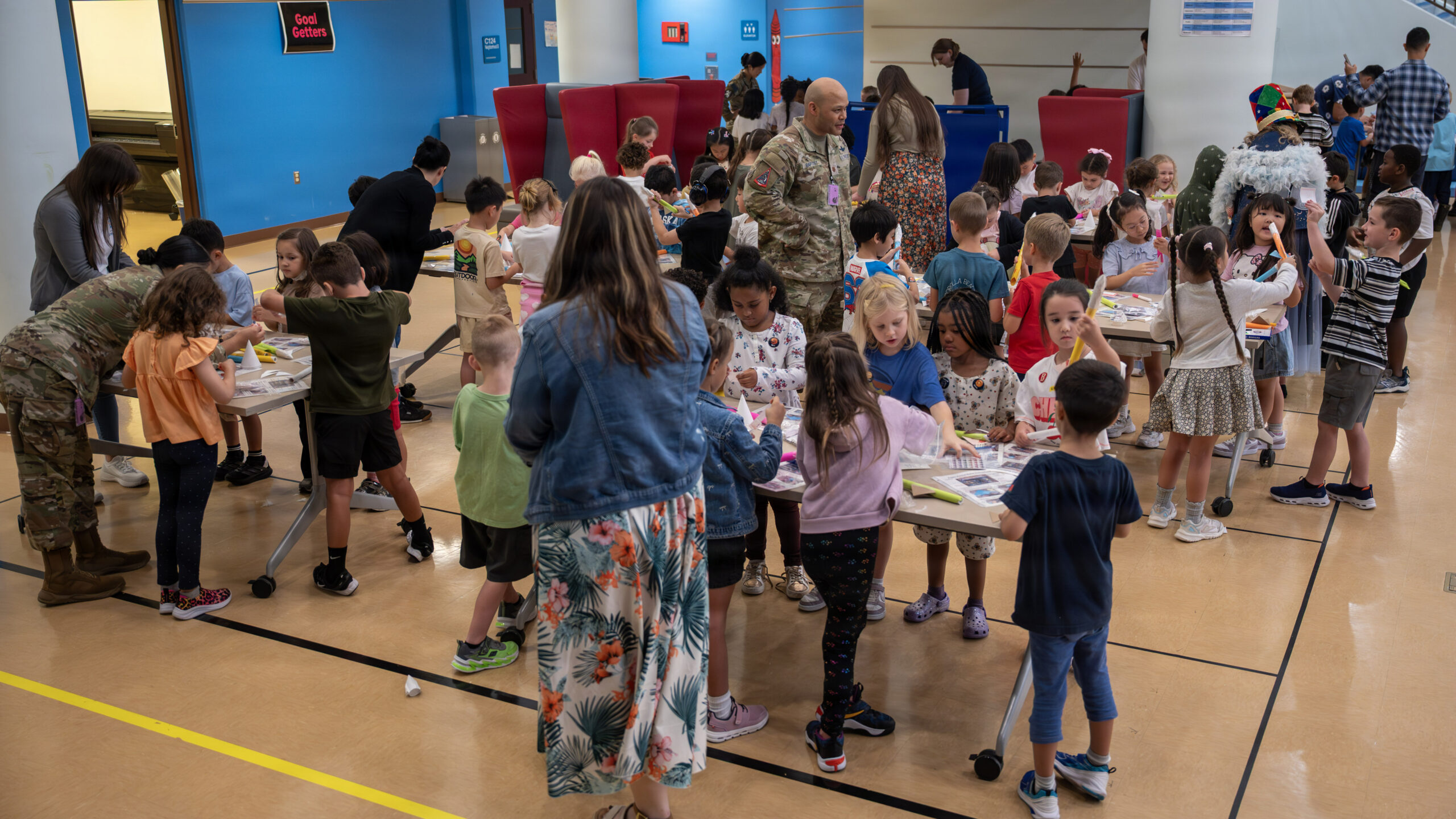
“Our goal is to really get kids interested young so that when the time comes, we will have a very sturdy, a very promising pipeline of scientists and engineers in the future,” Palmer said.
The program began five years ago at Los Angeles Air Force Base in California, which serves as the headquarters of Space Systems Command. It has since expanded into communities surrounding several Space Force installations.
Lessons are adjusted for the ages of participating students. Rather than simply asking children to memorize established ideas, the program encourages them to experiment, test possibilities and discover what they can create.
Nicole Tibbets, the command’s STEM executive lead, said the activities are intended to spark that creative approach.
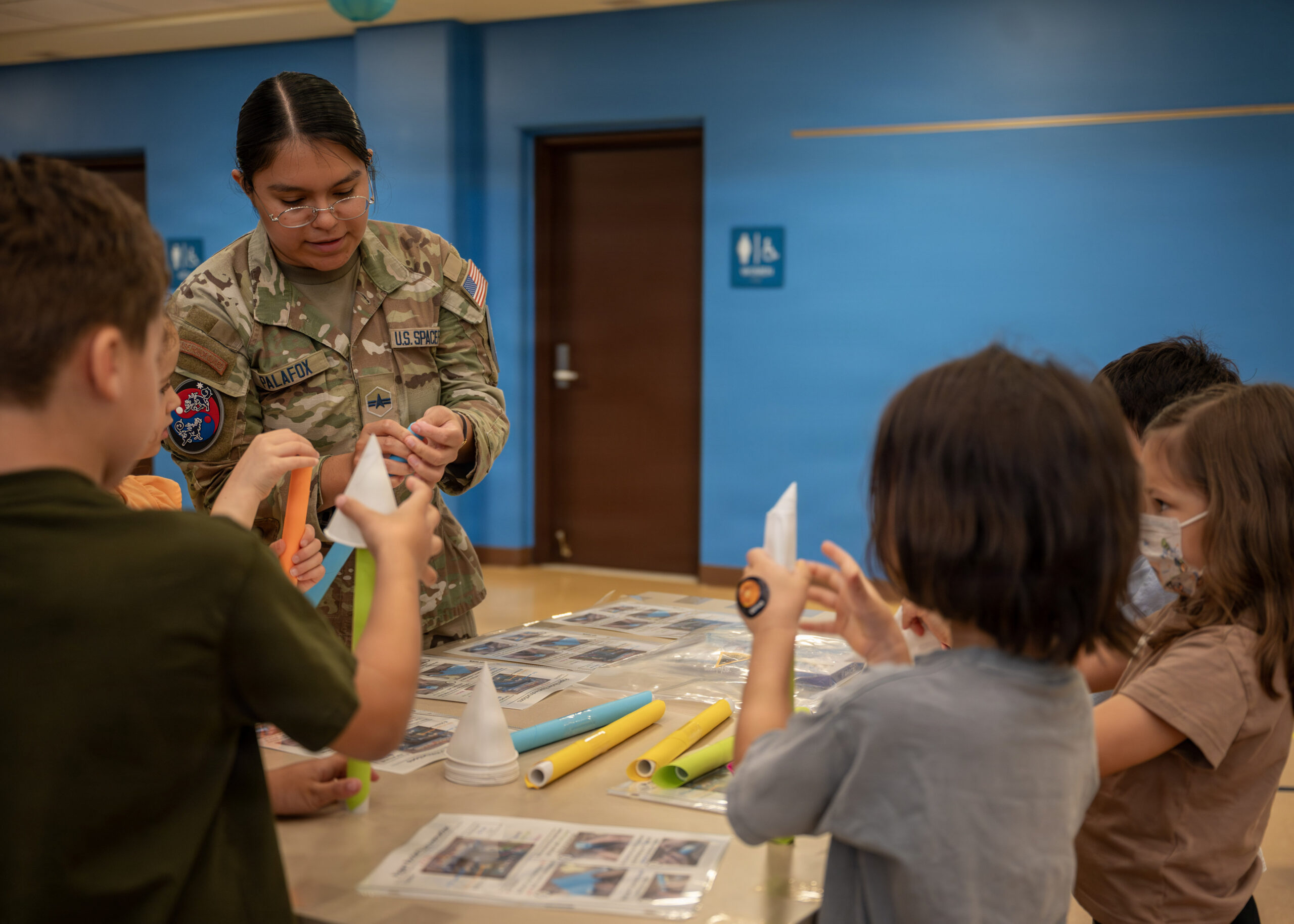
“This is meant to inspire them to go, ‘Hold on, I can play with this toy. I can make it do anything,’ ” she said at the event. “Because they can make it do anything. It’s their imagination.”
That freedom to experiment is particularly useful for younger children, according to Tibbets. They are still developing the ways they approach unfamiliar problems and may be less restricted by conventional patterns of thinking.
The program also seeks to transform a child’s natural curiosity about space into a wider interest in engineering and technology. Bishop pointed to the questions children may already have about the equipment operating above and around them.
“There are a lot of curious kids out there that are probably wondering, ‘How does that satellite work? How does that antenna work? How do they communicate between the Earth and space?’ ” Bishop said at the event.
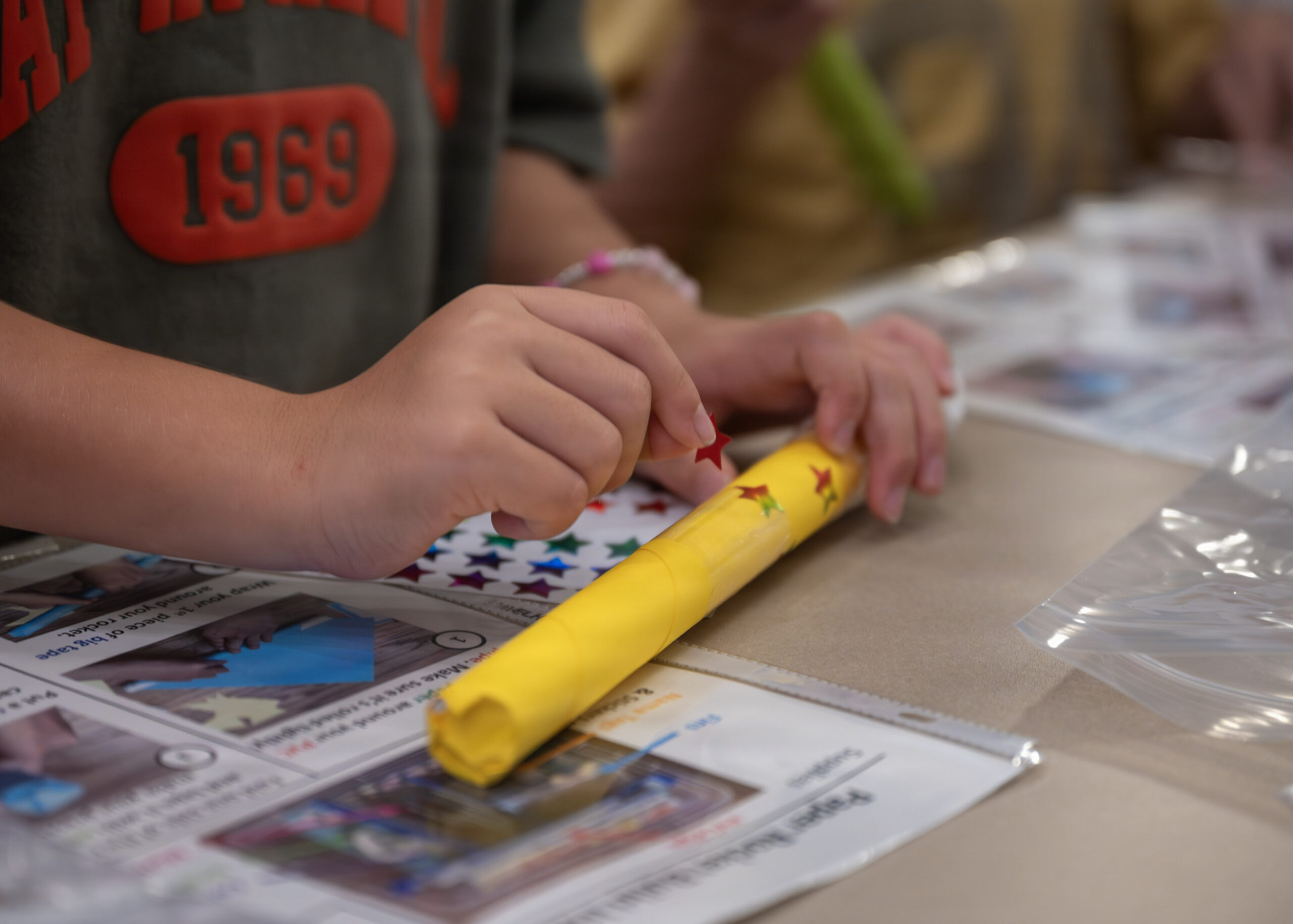
The program reached 12,141 students during the 2025 to 2026 school year. More than 106 events were conducted with support from 132 volunteers, according to Tibbets.
At Osan, local guardians joined the lessons and participated in the rocket activities.
Their involvement was intended to prepare them to conduct future STEM events without depending on the Los Angeles team.
That local capability could allow the program to reach another nearby military community.
Palmer said one guardian had already expressed interest in bringing the program to a school at Camp Humphreys, approximately 15 miles from Osan.
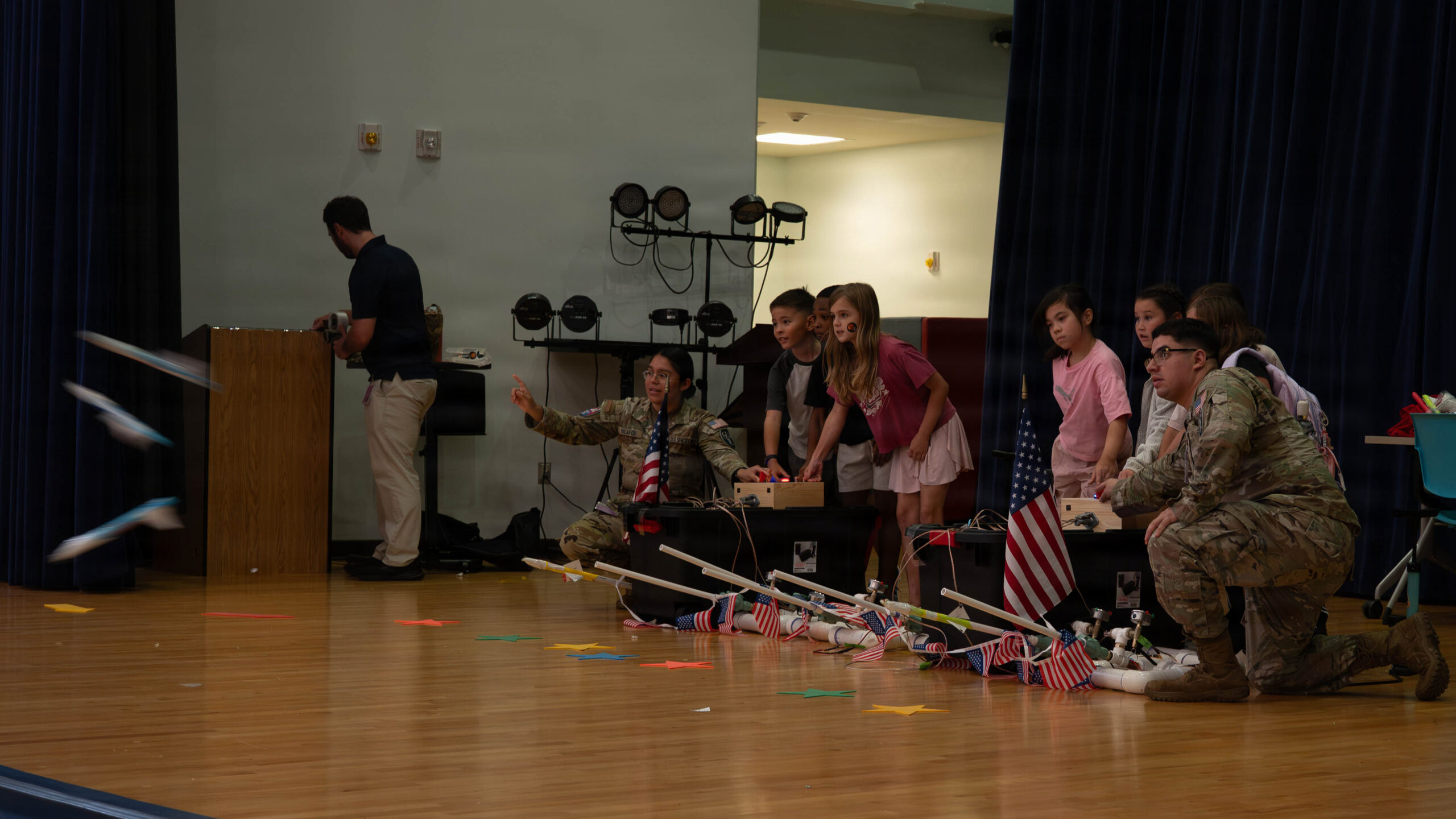
For the Osan students, the week combined basic space concepts with direct experimentation.
Satellite models, plush planets and homemade paper rockets provided accessible tools for asking questions, trying ideas and seeing how different designs performed.
The South Korea visit extended a program that has already moved beyond its original home at Los Angeles Air Force Base.
With guardians learning how to deliver the activities locally, Space Systems Command is positioned to continue offering the lessons at Osan and potentially at Camp Humphreys.
Gold is the oldest answer. SoundMoney makes owning it as easy as the apps you already use.
The opinions expressed by contributors and/or content partners are their own and do not necessarily reflect the views of LifeZette. Contact us for guidelines on submitting your own commentary.
Join the Discussion
COMMENTS POLICY: We have no tolerance for messages of violence, racism, vulgarity, obscenity or other such discourteous behavior. Thank you for contributing to a respectful and useful online dialogue.