WHAT YOU NEED TO KNOW
- 2nd Cavalry Regiment soldiers tested Silvus radios with Tactical Communications Nodes at Grafenwoehr Training Area.
- The wireless setup connected classified and unclassified networks from roughly half a mile away.
- Additional radios can relay signals farther, while two directly powered radios can reach a hub more than 3 miles away.
- The regiment hopes to make the validation course routine and train its other squadrons before year’s end.
On a battlefield increasingly monitored by drones, several hundred yards of separation can help protect soldiers from enemy detection and attack.
The 2nd Cavalry Regiment is testing a wireless communications method designed to create that crucial distance while keeping battlefield networks functioning.
Signals soldiers from the Vilseck based regiment tested the approach Thursday during a new validation course at Grafenwoehr Training Area in Germany.
The training paired mobile communications hubs with Silvus radios capable of carrying network connections wirelessly.
Gold. Upgraded. Buy real gold from $1. Store it in America. Sell it with one click.
Field command posts have generally depended on cables running between trucks and communications equipment.
Those physical connections allow soldiers separated by miles to exchange messages, coordinate movement, and request artillery or mortar fire.
Cables, however, can only extend so far. The wireless setup could let soldiers operate classified and unclassified networks while positioning themselves farther away from communications equipment that enemy drones might detect through thermal imagery.
During the course, soldiers connected Tactical Communications Nodes with Silvus radios in a large clearing.
This Could Be the Most Important Video Gun Owners Watch All Year
The mobile hubs provide field access to classified and unclassified networks, while the radios carry those connections without requiring soldiers to remain beside the equipment.
The soldiers established a radio connection from roughly half a mile away.
By positioning additional systems between the two points, the group was able to relay the signal across an even greater distance.
Spc. Juan Perez, a network communications specialist with 3rd Squadron, was among approximately a dozen squadron members experimenting with the method. He said the distance could allow soldiers to continue controlling communications gear without remaining physically close to it.
“That is important to us because with all the drone warfare nowadays, we can be away from our equipment and still be able to manage it remotely,” Perez said.
Perez, citing the device’s manual, said two radios with a direct power supply can reach a communications hub located more than 3 miles away.
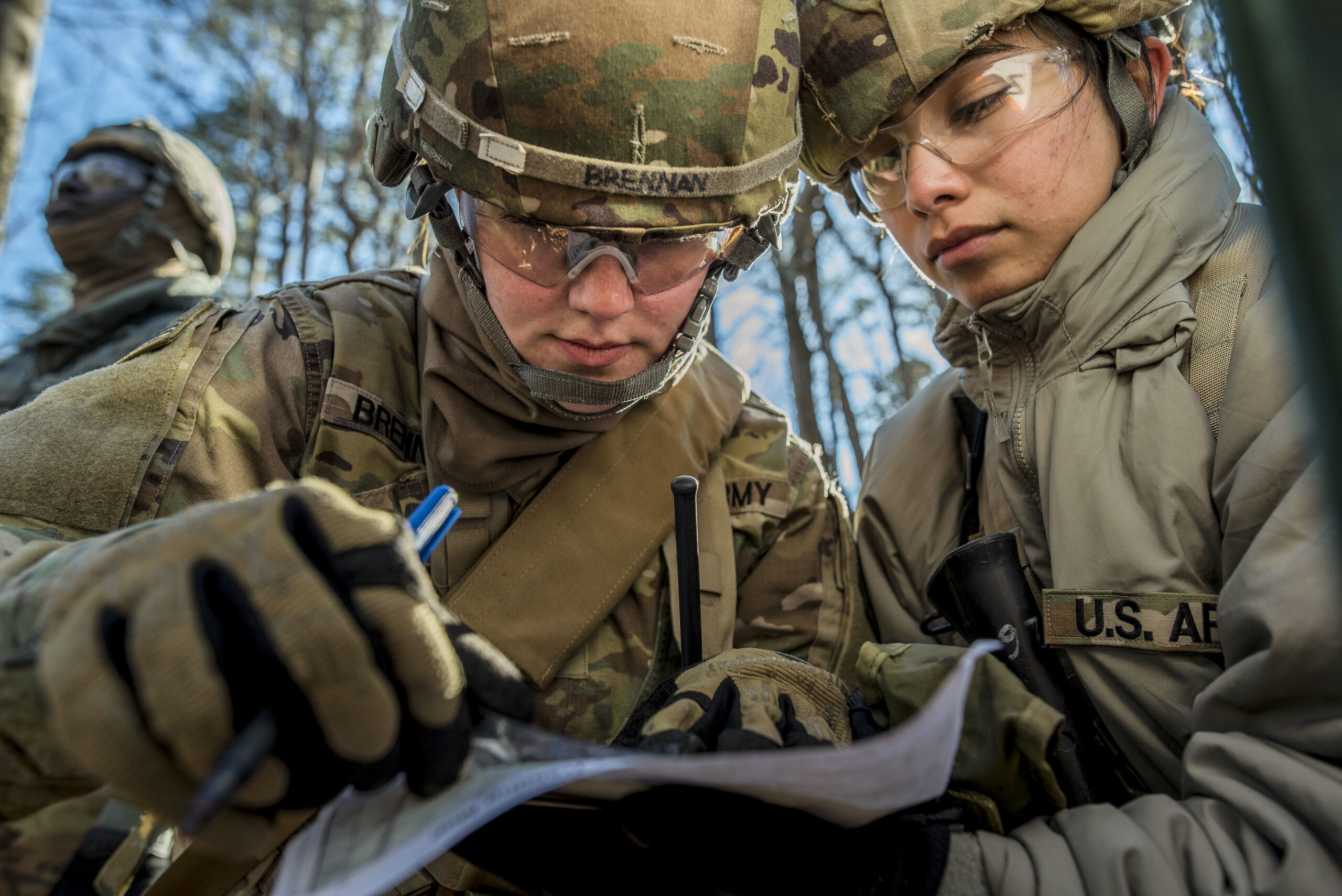
The Silvus radios operate together with the tactical communication nodes through a wireless network.
That network can connect equipment across a greater distance than a simple cellphone linked with another device.
For the soldiers conducting the validation, the capability was about maintaining communications while reducing their exposure around equipment.
Enemy drones can rapidly locate people and equipment by using thermal imagery. Sgt. 1st Class Emmanuel Ramosnavedo, a signal operations support specialist, said the physical separation could function as a “decoy” that helps keep soldiers alive.
Ramosnavedo described a situation in which a drone attacks the heat signature coming from communications equipment while the network operators remain hundreds of yards away. That distance would give the soldiers an opportunity to respond if a radio were destroyed.
“Then they will have more chances to react if one of (the radios) gets blown up,” Ramosnavedo said. “We know we are already in scope of somebody close by.”
The course included soldiers working on both classified and unclassified computer networks connected wirelessly to a Silvus radio. Other troops set up a Tactical Communications Node as the Signal Troop developed procedures for managing equipment remotely.
Thursday’s validation course was part of a new training program that the 2nd Cavalry Regiment hopes to make routine.
The regiment is the Army’s only Stryker brigade deployed forward, and its Signal Troop is developing the training for broader use inside the unit.
The regiment intends to teach its other squadrons how to use the tactics before the end of the year. The course is designed to reinforce technical knowledge while helping soldiers support the regiment’s communications requirements under battlefield conditions.
“Signal is a very underrepresented specialty within the regiment,” said Spc. Johnny Castillo, a network communication systems specialist.
“This training on its own reinforces knowledge and tactical readiness amongst our troops and it also helps us improve how we can support our organization.”
For the troops at Grafenwoehr, the test focused on a direct battlefield problem. Wireless connections could preserve access to critical networks while moving the soldiers managing them away from the heat signatures that enemy drones may target.
Gold is the oldest answer. SoundMoney makes owning it as easy as the apps you already use.
The opinions expressed by contributors and/or content partners are their own and do not necessarily reflect the views of LifeZette. Contact us for guidelines on submitting your own commentary.
Join the Discussion
COMMENTS POLICY: We have no tolerance for messages of violence, racism, vulgarity, obscenity or other such discourteous behavior. Thank you for contributing to a respectful and useful online dialogue.