Sen. John Kennedy (R-LA) raised constitutional concerns about the use of universal injunctions during a Senate Judiciary Committee hearing on Monday, questioning Assistant Attorney General nominee Brett Shumate about the legal foundation for district court judges issuing orders that extend beyond the parties involved in a case.
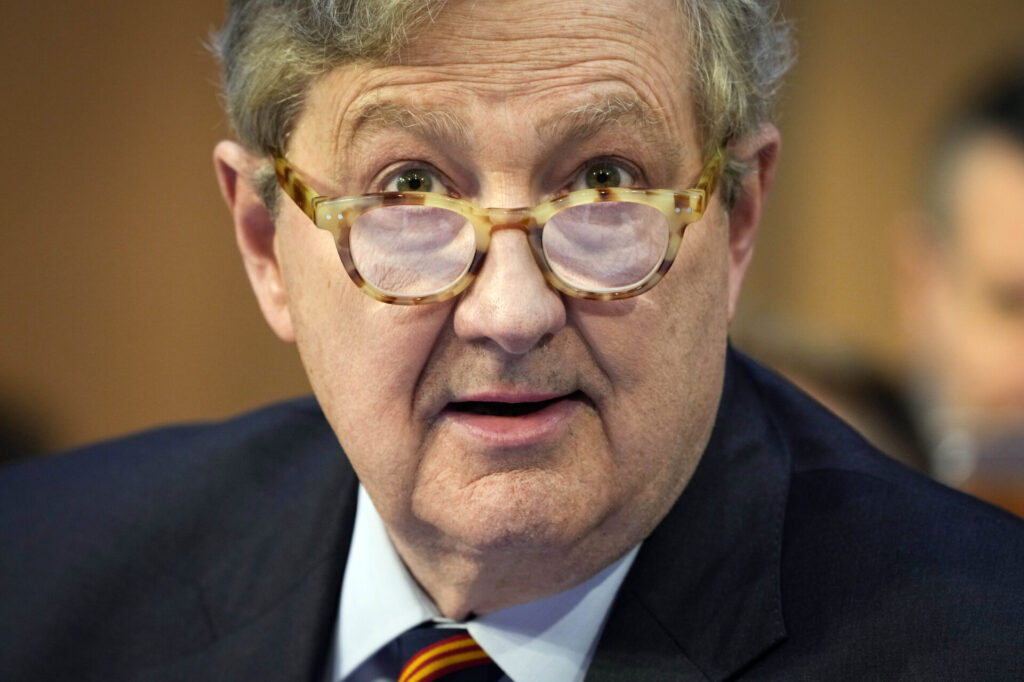
The hearing focused on judicial overreach and the authority of lower federal courts to issue rulings with nationwide impact.
Kennedy pressed Shumate to identify any legal, constitutional, or historical basis for what has become a common judicial tool to block federal policies.
Gold. Upgraded. Buy real gold from $1. Store it in America. Sell it with one click.
“Mr. Shumate, what’s a universal injunction?” Kennedy asked.
Shumate replied, “Senator, a universal injunction is an order from a court enjoining the government in a way that goes beyond the parties to the case but applies nationwide or in some cases universally.”
Kennedy then asked, “What’s the statutory basis for a federal judge issuing an order that affects people other than the parties before the court?”
“I’m not aware of a statutory basis, Senator,” Shumate responded.
This Could Be the Most Important Video Gun Owners Watch All Year
“There is no statutory basis, is there?” Kennedy repeated.
“No, Senator,” Shumate confirmed.
Kennedy continued pressing, asking whether the Constitution or any Supreme Court decision authorizes such injunctions.
“Can you name me that case?” Kennedy asked.
“I’m not aware of one, Senator,” Shumate replied.
“There isn’t one, is there?” Kennedy continued.
“I’m not aware of one, Senator,” Shumate repeated.
Kennedy outlined the standard legal principle that judges have jurisdiction only over the parties before them in a lawsuit. “You have a plaintiff and a defendant, and the plaintiff files a lawsuit in federal court. The judge has jurisdiction over those parties. How can a federal judge issue an order that affects everyone else outside of that courtroom?”
Shumate answered, “Uh, it shouldn’t be possible, Senator, but district courts do it all the time. I think on the theory that courts need to enjoin a federal policy from going into effect, and they often will enjoin it nationwide so that all non-parties are protected.”
Kennedy replied, “I thought that if you wanted to affect parties who aren’t in court, you had to file a class action.”
“That’s correct, Senator,” Shumate agreed.
Kennedy noted that plaintiffs are increasingly bypassing class actions and instead seeking universal injunctions. “Does this encourage forum shopping?” he asked.
“Yes, Senator. Not only does it encourage forum shopping, but also district shopping and filing multiple strategic lawsuits to find one judge who will enjoin a single policy nationwide,” Shumate said. “If you have five lawsuits, only one of those cases needs to be successful.”
Kennedy also addressed the historical context, asking whether such injunctions existed in common law courts in England.
“I don’t believe so, Senator,” Shumate replied, stating that equitable relief in traditional courts was limited to the parties in the case.
Kennedy then referenced the dramatic increase in universal injunctions issued during President Trump’s presidency. “Judges issued about 27 universal injunctions in the entire 20th century. But 86 of them were issued against President Trump in his first term. Is that correct?”
“I don’t know the specific number, but it was a high number,” Shumate responded.
“And so far in President Trump’s second term, 30 universal injunctions have been issued against him. Have they not?” Kennedy asked.
“Senator, I don’t have the specific number, but that sounds about right,” Shumate said.
“The universal injunction has become a weapon against the Trump administration, has it not?” Kennedy asked.
“Yes,” Shumate affirmed.
Kennedy concluded by questioning the constitutional grounding of the practice. “Tell me the basis for universal injunction in Article III. Where does it mention universal injunction?”
“It does not, Senator,” Shumate said. “It says courts are to decide the case or controversy before them, which is based on the parties to the case.”
Kennedy responded, “So Congress could act and say, ‘Look, federal judges, you render a decision to a plaintiff or a defendant, but you can’t impact people outside of your courtroom other than through a class action.’ That’s why God created class actions, isn’t it?”
“Yes, Senator,” Shumate said.
The exchange highlighted ongoing concerns among Republicans about the judicial branch exceeding its constitutional boundaries through the use of nationwide injunctions, particularly in cases involving Trump-era policies.
Gold is the oldest answer. SoundMoney makes owning it as easy as the apps you already use.
The opinions expressed by contributors and/or content partners are their own and do not necessarily reflect the views of LifeZette. Contact us for guidelines on submitting your own commentary.
Join the Discussion
COMMENTS POLICY: We have no tolerance for messages of violence, racism, vulgarity, obscenity or other such discourteous behavior. Thank you for contributing to a respectful and useful online dialogue.